
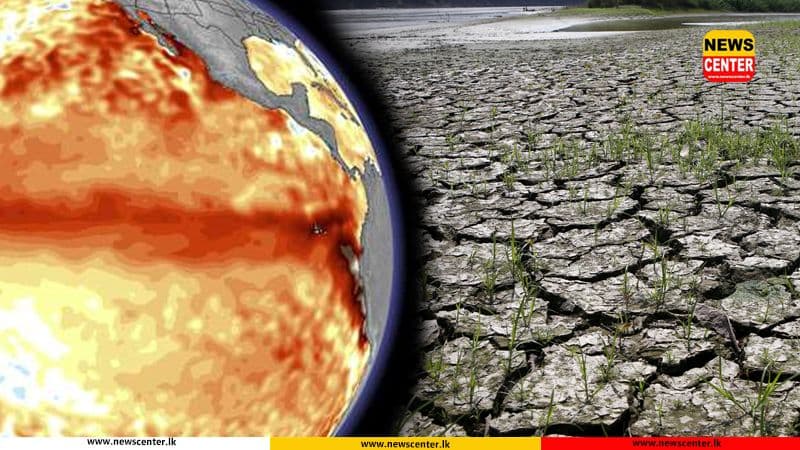
Sri Lanka is unlikely to experience a severe impact from the global El Niño weather phenomenon, according to the Director of the Climate Change Secretariat, Leel Randeni.
He noted that El Niño, driven by rising sea surface temperatures in the tropical Pacific Ocean, is expected by meteorologists to potentially contribute to higher global temperatures from February onwards.
Randeni said Sri Lanka is currently receiving Southwest Monsoon rains, which are expected to continue until September. While intermittent rainfall may occur during July and August, overall monsoon rainfall is expected to decline during this period.
He further explained that the Second Inter-Monsoon season, which typically brings heavier rainfall, will occur in October and November, followed by the Northeast Monsoon from December to February. The Northeast Monsoon is considered the main contributor to the country’s annual rainfall. The first Inter-Monsoon season is expected in March and April.
The Director of the Climate Change Secretariat added that July and August generally represent a relatively dry period in Sri Lanka. However, if El Niño conditions develop, their impact would be more pronounced on the Northeast Monsoon rather than other rainfall seasons.
Randeni also noted that current forecasts suggest a possible increase in temperatures during February and March next year if El Niño conditions intensify.
However, he emphasized that Sri Lanka’s geographic features—being an island surrounded by the Indian Ocean and featuring a central highland region—help moderate extreme climatic effects. He also pointed to the influence of the Indian Ocean Dipole, which affects evaporation and cloud formation, contributing to rainfall patterns in the region.
“As Sri Lanka is an island country with a central mountainous region, there is no significant possibility of moisture depletion. Therefore, we do not expect a major reduction in rainfall or a severe El Niño impact,” Randeni said.
He added that if a stronger El Niño event were to occur, it would likely be felt after December, around January or February. However, he stressed the importance of preparedness, including efficient water management and readiness for possible agricultural impacts such as reduced crop yields and lower paddy production.
Authorities have also urged continued monitoring and preparedness to address any potential climate-related challenges.

Two organized crime suspects involved in drug trafficking, who were arrested by security authorities in Abu Dhabi, United Arab Emirates,...
about 4 hours ago

Sarvajana Balaya has written to President Anura Kumara Dissanayake, urging him to take immediate action regarding the deteriorating health condition...
about 4 hours ago
Sri Lanka is unlikely to experience a severe impact from the global El Niño weather phenomenon, according to the Director...
about 4 hours ago

A former monk, identified as Rajangane Saddharathana, who had been expelled from the Buddhist monastic order, has been assaulted by...
about 12 hours ago

Organized criminal suspects 'Bloemendhal Sanka' and the brother of 'Modera Nipun', who are involved in organised crimes, have been deported...
Featuredabout 15 hours ago

A group of former Members of Parliament has forwarded a letter to President Anura Kumara Dissanayake under the title “Let...
Featured1 day ago

A 40-year-old father walking on the road while holding his child was killed after being struck by a bus near...
1 day ago